Building Community Coalitions

What is COMMUNIVERSITY?
Communiversity implies a link between a university and the community. The current collaboration is an interactive collaboration with mutual respect for the experience and contributions of all involved. It involves the collaboration between a nonprofit harm-reduction organization with an Historically Black University, (HBCU) allowing the organizations to effectively work together to reduce opioid misuse, overdose, and deaths in Durham, and throughout North Carolina.
The importance of a community coming together to solve the opioid problem cannot be overstated. This issue affects the entire community. Advantages of working together toward a solution include the following.
- When individuals agree that change is in their best interest, they can accomplish more by working together than by working individually.
- Collaboration can be a powerful force when solving problems that affect society as a whole.
The power of many different minds contributing to an initiative can improve the likelihood of successful outcomes.
Elements of Effective Community Coalitions




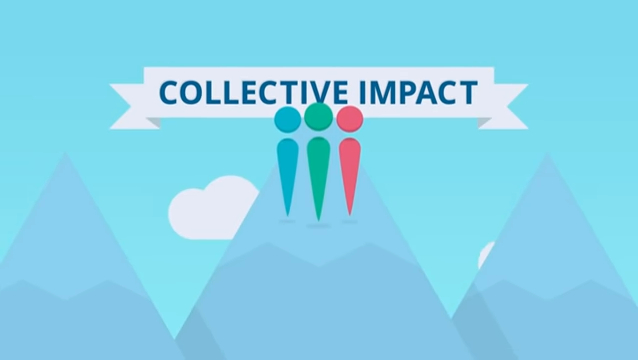
What Is Collective Impact?
Collective impact is the commitment of a group from different sectors working toward a common agenda for solving a specific social problem.
Organizations have been implementing collective impact for a long time. These successful collective impact initiatives have five conditions for their success.
Source: Community Toolbox (2023). University of Kansas.
1. COMMON AGENDA
All participants share a vision for change. It includes a common understanding of the problem and a joint approach to solving the problem through agreed-upon actions.
2. Shared Measurement
All participating organizations agree on measuring and reporting success. They develop a short list of common indicators they will use for learning and improving.
3. Mutually Reinforcing Activities
Diverse stakeholders, typically across sectors, coordinate differentiated activities through a mutually reinforcing action plan.
4. Continuous Communication
All players engage in frequent and structured open communication to build trust, assure mutual objectives, and create common motivation.
5. Backbone Support
An independent, funded staff is dedicated to the initiative. The staff provides ongoing support by guiding the initiative’s vision and strategy, supporting aligned activities, establishing shared measurement practices, building public will, advancing policy, and mobilizing resources.
How Might a Collaborative Reduce Opioid Deaths?
Many factors are responsible for the continuous increase in overdose rates, such as health disparities, social determinants of health, and income inequality. The disparities in opioid overdose (OOD) rates result not only from substance abuse but also from the inequality in or inaccessibility of substance abuse treatment and insufficient mental health access and stigma about seeking treatment. Lack of access to treatment and socioeconomic inequality are barriers against Hispanics and Black people seeking mental health care and substance abuse treatment.
We must work to reduce disparities; we can change things so that all people are treated more equitably, and ensure that the systems in place works for everyone!
By coordinating, communicating, and collaborating with education, public health, public safety, and other sectors, we can apply a cross-systems approach to inform and design overdose prevention interventions, programs, and policies and ensure they are available to all our neighbors (Houry, 2022). Several organizations are on paths like ours, and we might work together with such groups that are not directly focused on opioids but on health concerns, including the Prevention Institute and the National Network of Immunization Coalitions, which have several publications and resources that we could use in fulfilling our objectives. See PreventionInstitute.org and use works such as the CDC’s Public Health and Safety Team Toolkit.
Community Engagement
Community engagement is “a process of developing relationships that enable stakeholders to work together to address health-related issues to promote well-being for positive health impacts and outcomes” (WHO, 2020). To succeed in our community, our Collaborative will review data associated with opioids across the lifespan and develop an authentic view from a grassroots perspective: The opioid epidemic that you do not see. Collaborative members are trained to provide prevention information to the greater community, and all of us, as individuals as well as members of larger groups, can play a role in stopping the opioid epidemic that is ravaging our community.
- The collaborative will use a variety of methods, including mapping to determine intense areas of opioid overdoses in the Black community and talk with community members, employing motivational interviewing skills appropriate to this community (CDC, July 2022).
- The collaborative will help ensure the availability of fentanyl test strips and Naloxone. We will alert the community to the availability of Naloxone and the importance of staying in treatment till the craving for substances has diminished.
- We will work with additional stakeholders outside of the Collaborative to ensure all parts of the community have a voice and can be heard about their concerns.
- The collaborative will provide training and guide peers to help with interventions.
- We will link with those outside of the current coalition to provide a broader base of support to include the medical community, additional members of the faith community, and representatives of the elderly and veterans so that high-risk groups can receive attention and learn new skills for prevention.
Integrating Adverse Childhood Experiences (ACEs) within Community Engagement
Adverse Childhood Experiences (ACEs) are early life events that can have lasting effects across a person’s lifespan. Because of their profound impact, we’ve devoted Module 3 entirely to understanding ACEs. However, ACEs are not just an individual concern, they represent a community challenge as well. As you move through this module, consider how our communities can work together to create safer, more supportive environments for children. When we strengthen the well-being of our youth, we strengthen the well-being of everyone, leading to fewer cases of delinquency and improved health outcomes.
- Family-friendly policies and offering employment assistance programs where those who need help with family problems, including substance misuse and mental health, can get it confidentially.
- Some companies can adopt local schools and provide corporate staff as mentors and support, offering scholarships and employing local residents including teens in summer programs.
- Community leaders, including politicians, clergy, educators, business leaders, and neighbors, can meet to implement and support programs that address substance use prevention, mental health support, treatment access, housing and economic stability.
Community Engagement Through Enthodrama
Kites is the fourth Ethnodrama produced through the North Carolina Central University and Duke University Partnership Community Engagement Core.



When we work together, we can make many positive things happen that will not only lower the OUD rate but enhance the lives of all people in our community.
Some Community Organizations Making a Difference
Safe Kids NC Safe Disposal
Safe Kids North Carolina partners with the State Bureau of Investigation, the Drug Enforcement Administration and local Safe Kids Coalitions and law enforcement agencies to provide a safe disposal method for over-the-counter medicines and old or unneeded prescriptions.
NC Harm Reduction Coalition (NCHRC)
Naloxone kits and instructions are provided by NCHRC throughout North Carolina. Kits are available on Fridays from 4 – 6 p.m. at the Sunrise Recovery House during the summer.
NCHRC in Durham County provides clean needles and injection supplies to those addicted to opioids. nchrc.org
Community Linkages to Care (CLC)
The CLC program aims to connect Durham County residents to treatment and support for substance use or addiction. Support includes harm reduction, housing, food and jobs.
Together for Resilient Youth (TRY)
Together for Resilient Youth (TRY) prevents Adverse Childhood Experiences, racism, and historical trauma that can lead to substance use, suicide, and violence. TRY works to build resilient communities through education, grassroots action, and collective impact.